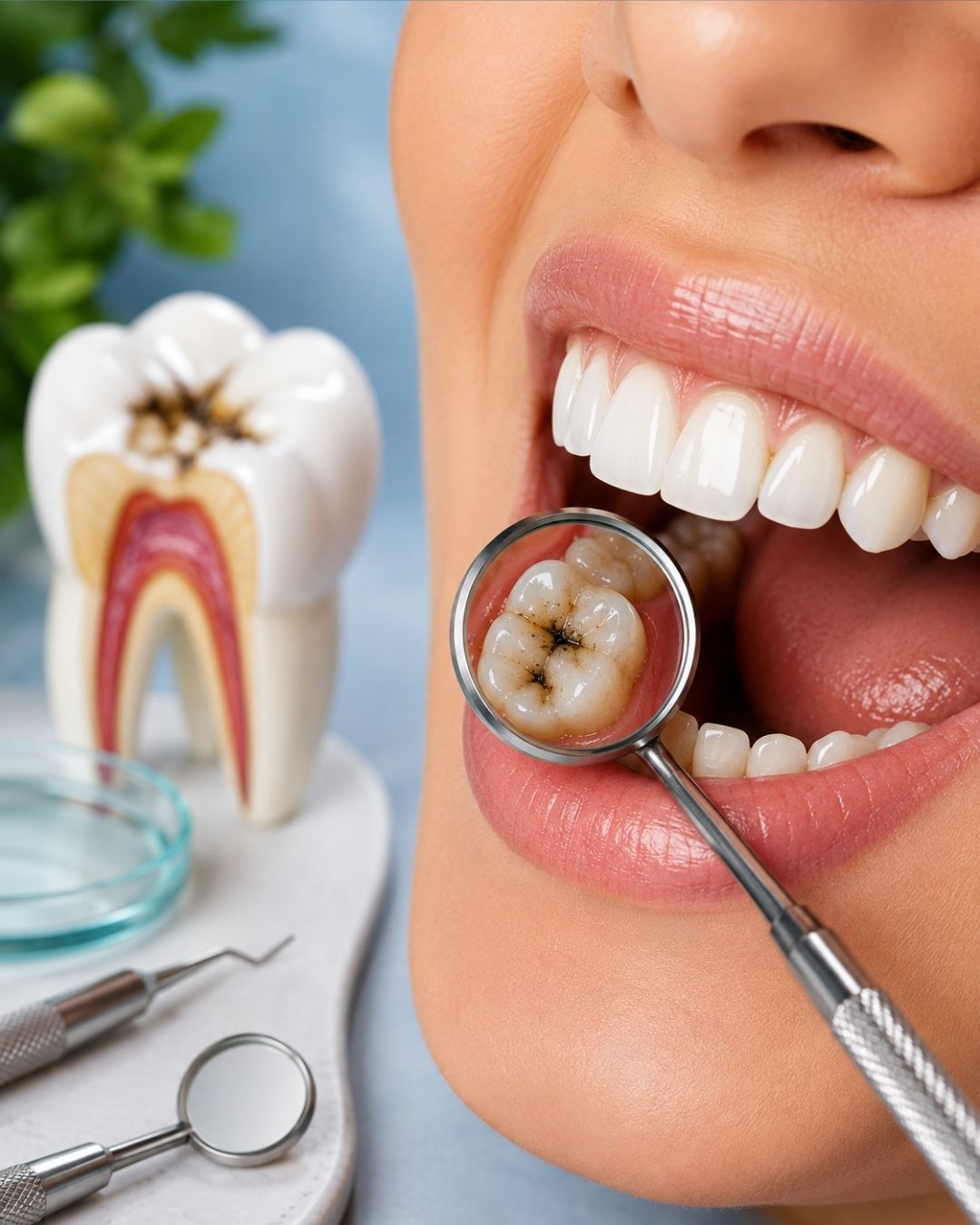
Why do black spots appear on teeth? Are all black spots a sign of decay?

Small black spots noticed on or between teeth can immediately cause people to worry about cavities. However, not every dark area on a tooth necessarily means an active cavity.

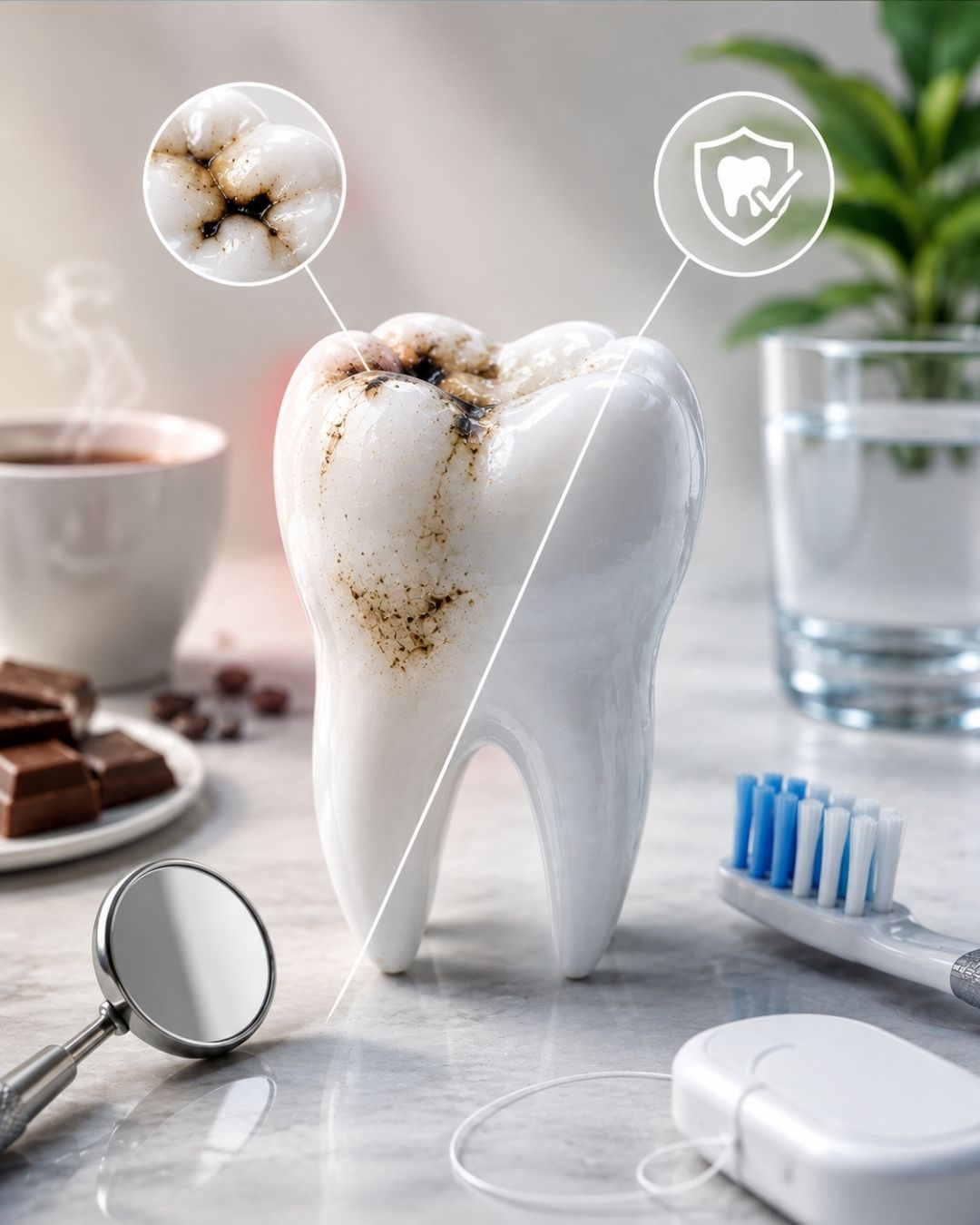
Superficial stains, tartar, discoloration around old fillings, and the natural structure of tooth enamel can also lead to black or dark brown appearances. Therefore, instead of determining the cause of the black spot solely by looking at its appearance, it should be evaluated by a dentist through an examination.

Could Blackheads Be a Sign of Tooth Decay?

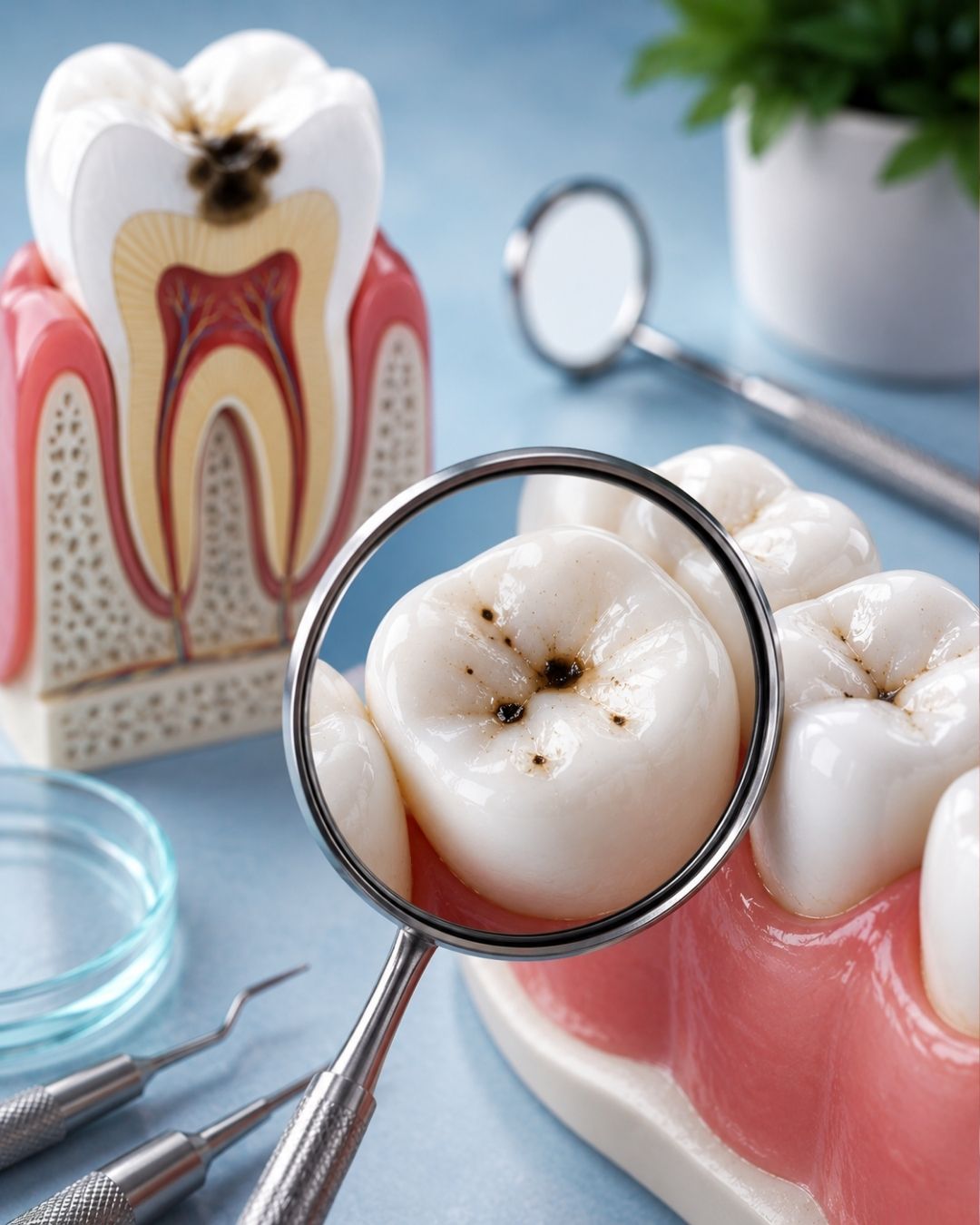
Tooth decay doesn’t always appear black initially. In the early stages, a white and matte area may form on the enamel. As the decay progresses, brown or near-black color changes may occur.

Black spots, especially those that form in the deep grooves of the chewing surfaces of teeth, may be associated with cavities. If these spots are accompanied by hot and cold sensitivity, pain when eating sweets, or a pitting of the tooth, a professional evaluation becomes even more important.

Coffee, tea, and cigarettes can cause black spots.

Frequent consumption of beverages with high pigment content, such as coffee and tea, can cause staining on the tooth surface over time. Smoking and other tobacco products can also cause discoloration of teeth ranging from yellow to dark brown.

These types of stains usually occur on the outer surface of the tooth. Professional cleaning and polishing can significantly reduce some superficial discoloration. However, it should not be considered solely an aesthetic problem without determining whether the stain is decayed.

Tartar can also appear dark in color.

Tartar, which accumulates around the gum line and especially on the inner surfaces of the teeth, can turn a dark brown or almost black color over time. This may be more noticeable in people who consume foods and drinks that stain intensely or who use tobacco.

Since tartar cannot be removed by brushing at home, professional tartar removal may be necessary.

How are blackheads treated?

The treatment method depends entirely on the cause of the blackhead. If it’s a superficial discoloration, professional cleaning may suffice. If decay is detected, the damaged tissue can be removed and an appropriate restorative treatment can be applied.

Early detection of tooth decay helps preserve as much healthy tooth tissue as possible. Therefore, it is important to get checked out before pain develops.

Bayrampaşa Dental Clinic aims to determine the appropriate treatment approach for patients by evaluating the causes of black spots and discoloration seen on teeth. Avrupa UBK Dental, on the other hand, utilizes modern imaging and restorative dentistry methods to offer treatments aimed at preserving both oral health and the natural appearance of teeth.

When should you see a dentist if you have blackheads?

If a newly noticed black spot on a tooth is growing, if there is pitting on the surface, or if symptoms such as sensitivity and pain appear, a dental check-up should not be delayed. Even without symptoms, regular check-ups to assess these areas are beneficial for early diagnosis.

Conclusion

Not every black spot on teeth is a cavity; however, some black spots can be a sign of developing decay. Since staining, tartar, and decay can all look similar, determining the exact cause through a professional examination is the most accurate approach. Regular oral care and dental checkups can help detect potential cavities early, preventing the need for more extensive treatments.

Shopping Basket
Call Now Button