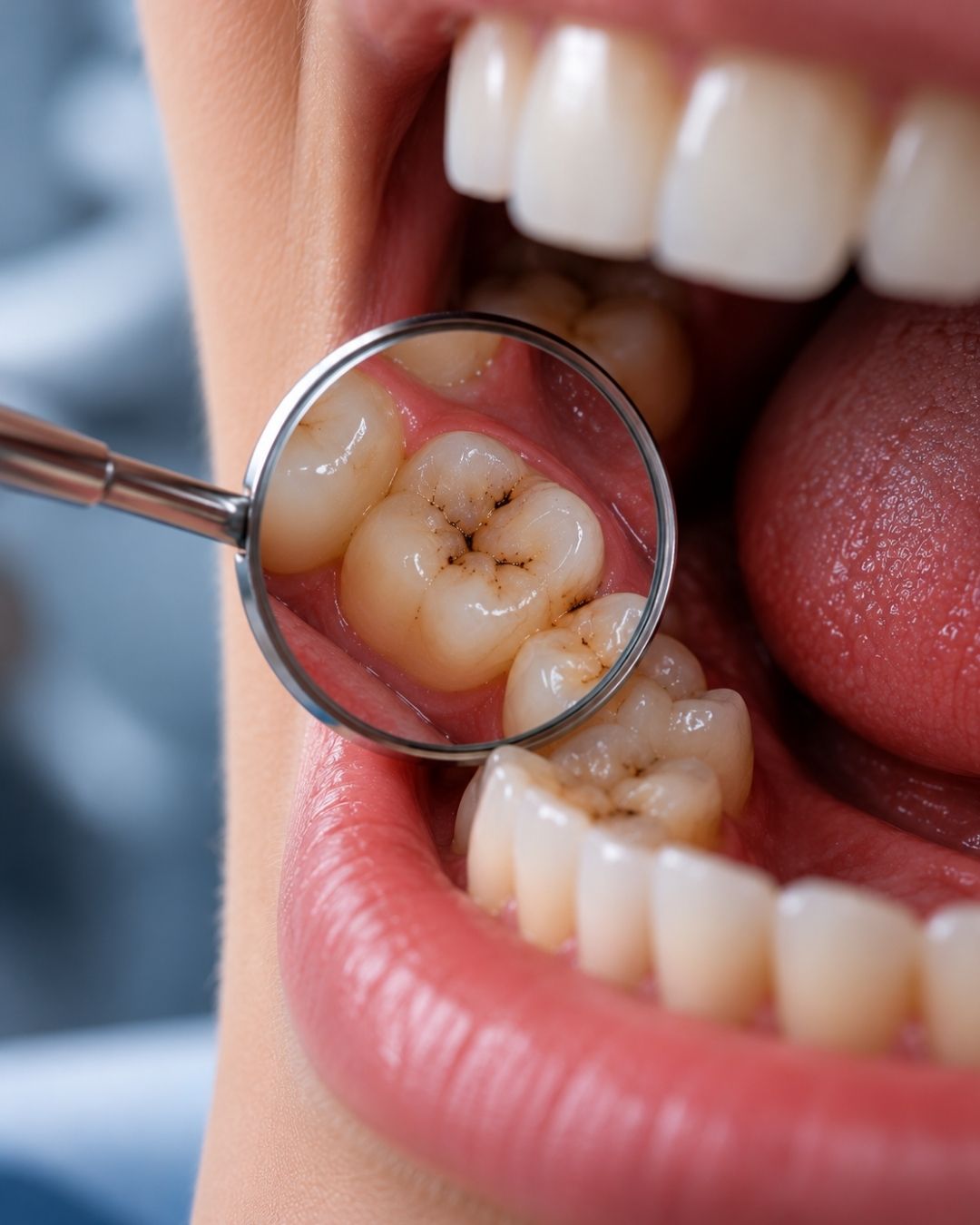
Over time, various color changes can occur on the surface of the teeth. In particular, the appearance of small black dots or dark-colored stains often leads many people to suspect tooth decay. However, not every black spot on a tooth necessarily indicates decay. While some discolorations are merely superficial stains caused by food and beverages, others may be related to the buildup of tartar or structural changes within the tooth tissue.
In this article, we at Avrupa UBK Dental explore why black spots appear on teeth, when they might indicate tooth decay, available treatment options, and the steps you can take to prevent tooth discoloration.
Black spots on teeth refer to small, dark-colored areas that appear on the tooth enamel or in specific parts of the teeth. These spots can typically be found in the grooves on the chewing surfaces of molars, in areas where teeth come into contact with one another, or near the gum line. The appearance, size, and location of these black spots can vary from person to person. While some stains are merely surface-level discolorations, others may be associated with tooth decay. For this reason, it is not possible to reach a definitive conclusion based solely on the color of the spot.
There are many different reasons why black spots may form on teeth. Frequent consumption of tea, coffee, and certain other foods or beverages with staining properties can lead to discoloration on the tooth surface over time. The use of cigarettes and other tobacco products can also contribute to the development of dark-colored deposits on the teeth. Furthermore, dental plaque and tartar (calculus) on the tooth surface can become discolored over time. Pigment accumulation can occur, particularly within the deep grooves found on the chewing surfaces of the molars. In some cases, tooth decay (cavities) affecting the enamel may also appear as brown or black areas. To determine the cause of a black spot, a dentist must evaluate the surface characteristics of the tooth and the surrounding tissues.
Not every black spot seen on the surface of a tooth is a cavity. In some individuals, discoloration may develop over time within the natural pits and grooves of the teeth; such spots can appear even in the absence of any actual tooth decay. However, certain dark-colored areas may indicate changes in the tooth structure caused by decay. In particular, if the surface integrity is compromised—such as the formation of a cavity (pit) or the development of sensitivity in the area—a more detailed evaluation may be required. Furthermore, cavities do not always appear black, and some may not even be visible to the naked eye. Therefore, one should not determine whether or not a cavity exists based solely on the appearance of a spot.
The chewing surfaces of molars feature natural indentations and grooves that facilitate the breakdown of food. In some individuals, these areas can be quite deep, making it difficult for toothbrush bristles to reach them. Over time, plaque and staining substances that accumulate in these grooves can lead to the appearance of dark spots. These same areas also require careful assessment regarding the potential development of tooth decay. The risk of decay in these regions can increase, especially when regular oral hygiene is neglected or sugary foods are consumed frequently. However, the presence of a dark spot on a molar does not, by itself, mean that a dental filling is necessary.
Dental calculus (tartar) is a hard deposit that forms when bacterial plaque accumulating on the tooth surface becomes mineralized over time. While it typically appears in shades of light yellow or brown, it can take on a darker color due to the influence of various pigments. Calculus located near the gum line or beneath the gums, in particular, may appear dark brown or even nearly black. Since dental calculus cannot be removed through regular brushing, professional cleaning is often required. Controlling the accumulation of calculus is important not only for aesthetic reasons but also for maintaining the health of the gums.
Black spots on teeth do not always cause pain. Superficial discoloration can often be present without causing any sensitivity or discomfort. However, if a cavity has developed beneath a black spot, sensitivity to hot, cold, or sweet foods and drinks may occur, depending on the extent of the decay. In more advanced cases, one might experience pain while chewing or even spontaneous toothache. It is important to note, however, that the absence of pain does not necessarily mean there is no cavity. Therefore, it is essential to have any black spots that have persisted for a long time—or that have changed in appearance—evaluated by a dentist.