Why Do Dental Fillings Fall Out? What Should Be Done If a Filling Falls Out?

Dental fillings are restorative treatments performed to restore the function and structure of teeth that have suffered tissue loss due to decay or other causes. However, although fillings are permanent, there is no guarantee that they will remain in the mouth trouble-free for a lifetime. Over time, wear and tear, the development of new decay, or high forces exerted during chewing can cause the filling to become damaged or dislodged completely.

In this article, as Avrupa UBK Dental, we discuss why dental fillings might fall out, what steps to take when a filling comes loose, and when it is important to consult a dentist.

Why Do Dental Fillings Fall Out?

Teeth are subjected to significant forces during chewing every day. Over time, a long-standing filling may undergo wear, develop cracks, or suffer from a deterioration in marginal integrity. The formation of new decay around or beneath the filling can also compromise its bond to the tooth. Additionally, biting into hard foods, habits such as clenching or grinding, or a sudden impact to the tooth can cause the filling to fracture or become dislodged.

Can Decay Form Again Under a Filling?

Yes, it is possible for a tooth that has previously been filled to develop new decay. If the seal between the filling and the tooth deteriorates over time—particularly at the margins—areas conducive to plaque accumulation can form. New decay developing in these regions can spread beneath the filling. Therefore, having a filling does not mean the tooth is immune to future decay. Just like other teeth, filled teeth require regular brushing, interdental cleaning, and routine dental check-ups.

What does it feel like when a filling falls out?

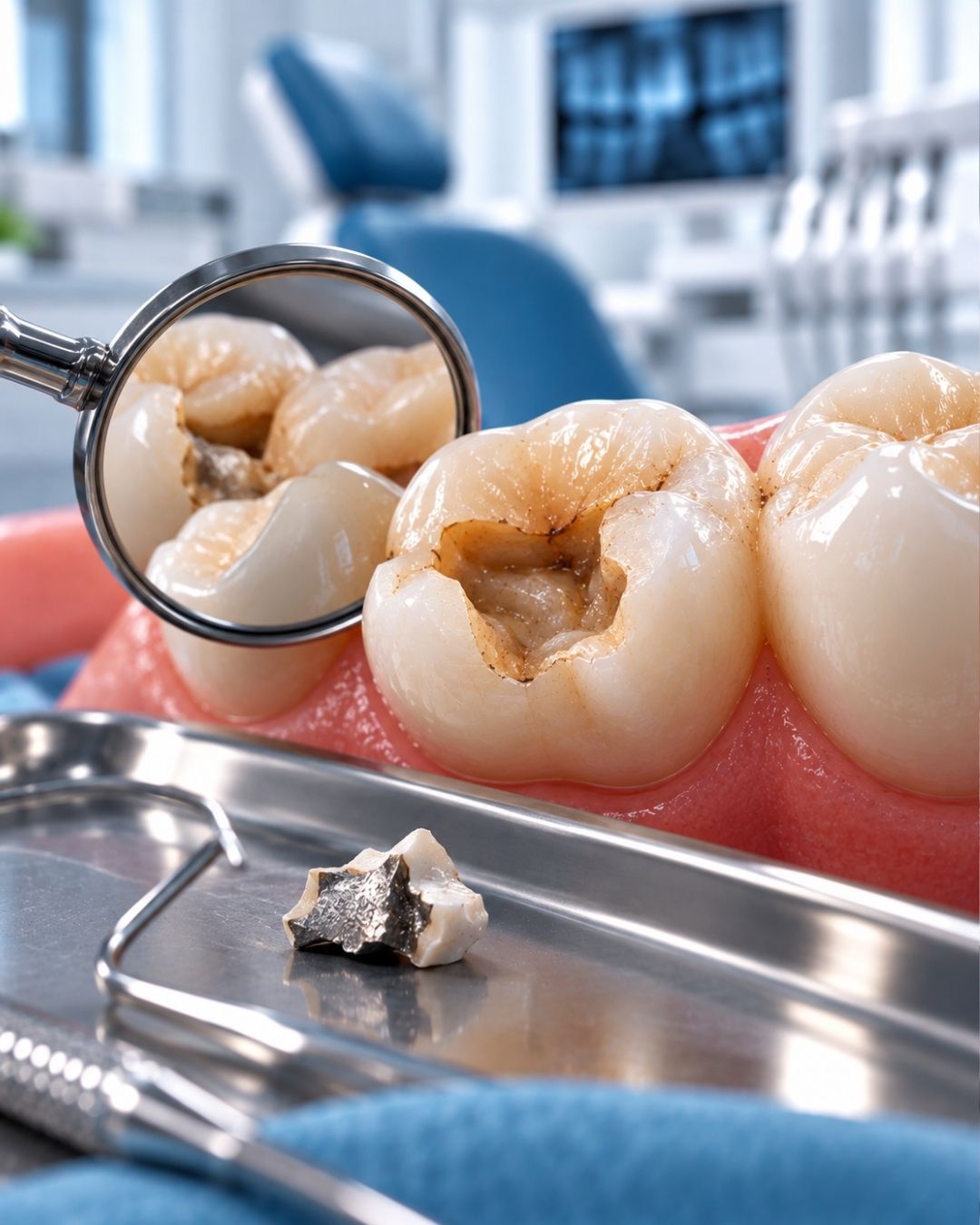
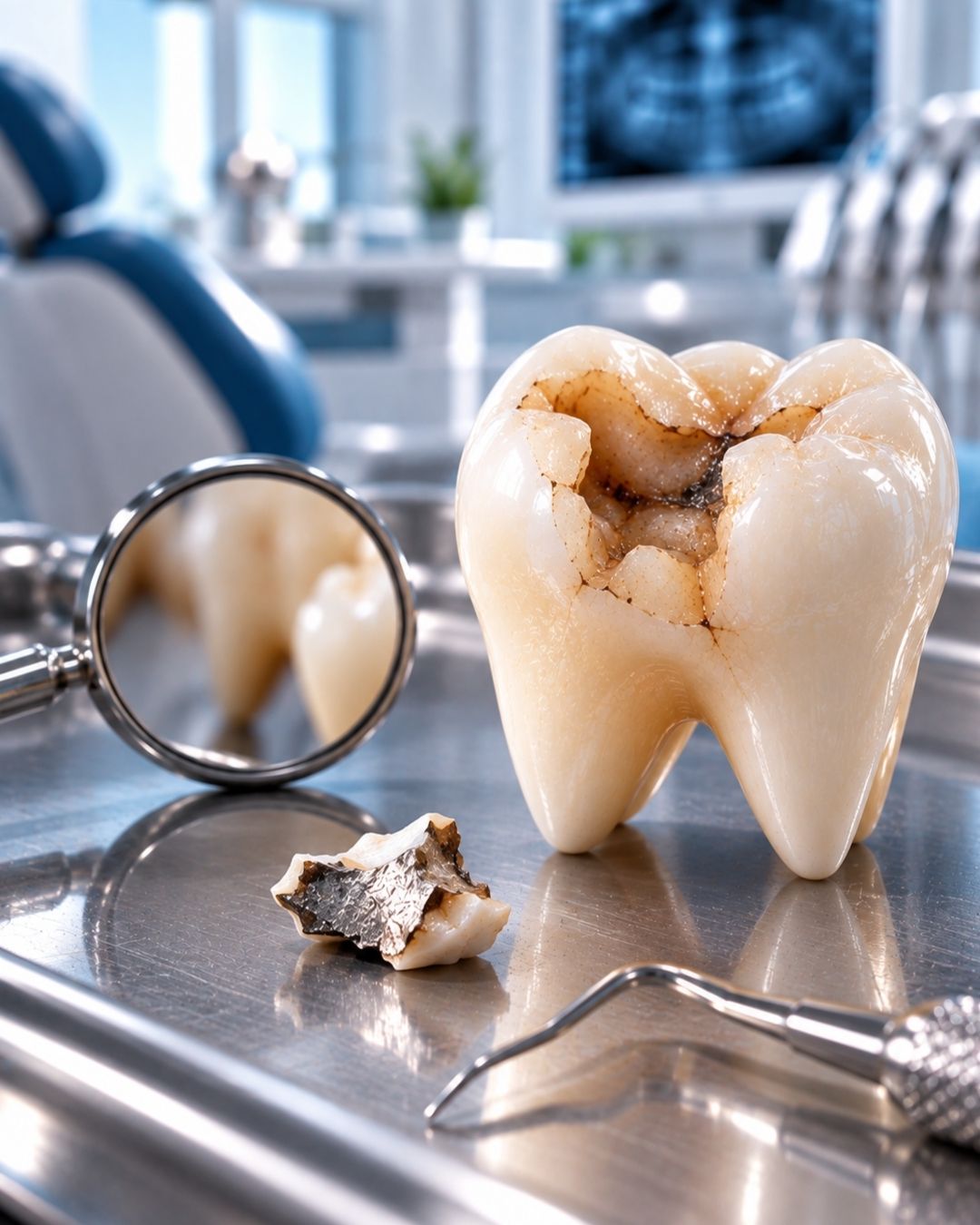
When a filling falls out completely, a person may often feel a gap or cavity in the tooth. The tongue may constantly catch on this area. Sensitivity can occur when consuming hot, cold, or sweet foods and beverages. While some individuals experience pain during chewing, in other cases, there may be no pain at all despite the loss of the filling. The absence of pain does not mean there is no problem with the tooth.

What Should Be Done When a Filling Falls Out?

It is advisable to have the tooth evaluated by a dentist as soon as possible after noticing that the filling has fallen out. Until the examination, one should avoid chewing very hard foods with the affected tooth and ensure the area is kept clean. Inserting foreign objects into the tooth or attempting to reattach the filling using household adhesives is not appropriate. Professional evaluation should not be delayed, especially if there is sensitivity or pain.

Can a fallen filling be replaced?

The treatment for a failed filling depends on the current condition of the tooth. If there is no new decay or significant loss of tooth structure, it may be possible to replace the old filling with a new restoration. However, if decay has developed beneath the filling, the decayed tissue must first be removed. Subsequently, an appropriate restorative treatment is determined based on the amount of remaining healthy tooth structure. In cases involving severe fracture or significant loss of tooth structure, alternative restorative options may be considered.

Is a Root Canal Necessary When a Filling Falls Out?

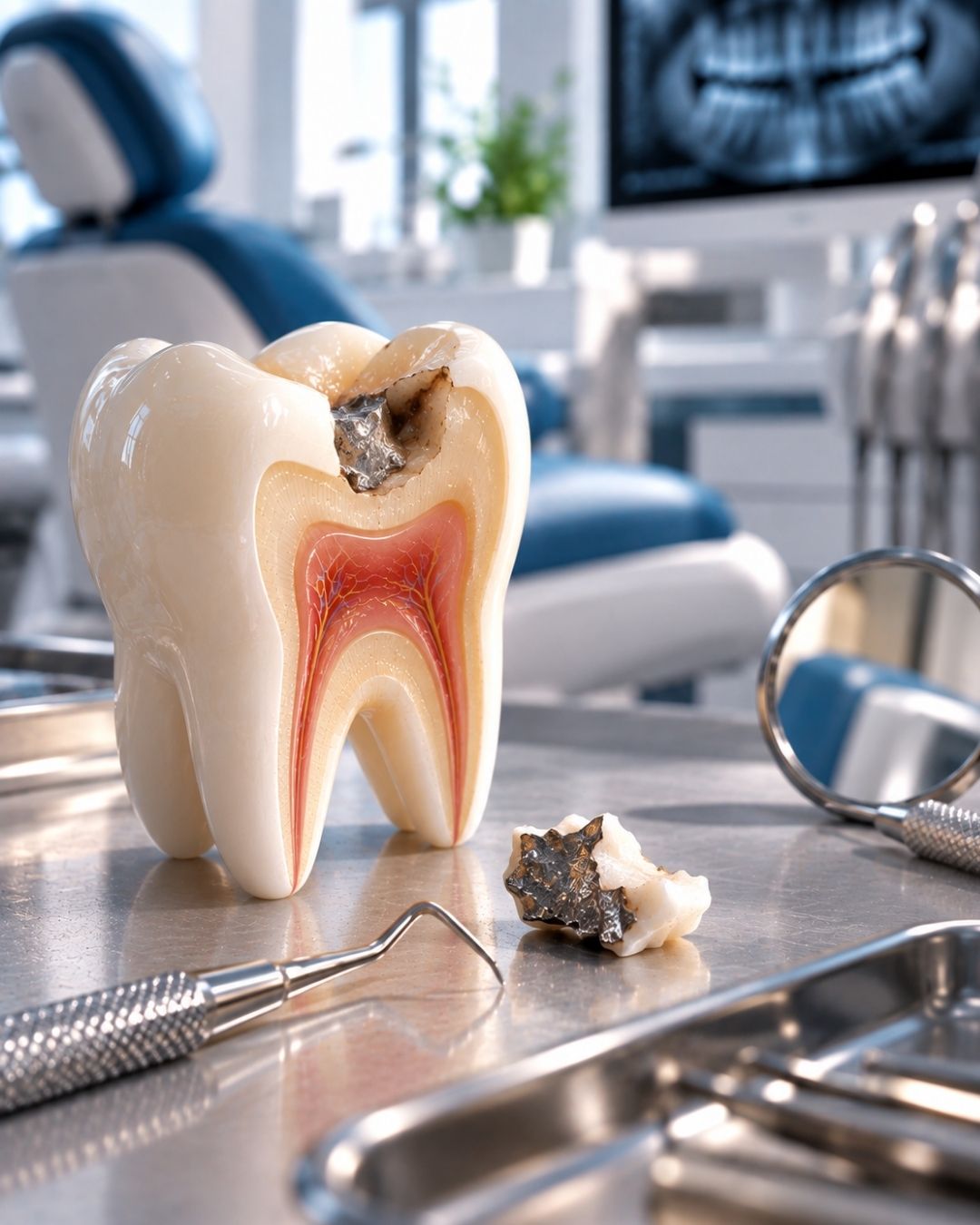
Not every lost filling requires a root canal treatment. However, if decay has progressed over a long period and affected the tooth’s inner section—known as the pulp—a root canal may be necessary. Symptoms such as severe or spontaneous pain, toothache occurring at night, or prolonged sensitivity to hot and cold temperatures may warrant a more detailed assessment of the tooth. Whether a root canal is required can only be determined through a clinical examination and any necessary radiographic evaluations.

Shopping Basket
Call Now Button